Here’s a truth nobody in the card industry likes to admit: most members don’t care about their membership card. They care about what the card gets them — access, discounts, belonging. The card is just the key.
So the question isn’t “what card should we order?” It’s “what do our members need this card to do?”
Digital vs Physical: It’s Not Either/Or
Every few years someone declares physical membership cards dead. Apps will replace everything. And yet — gyms, clubs, golf courses, and associations across Ireland are still ordering physical cards in serious quantities.
Why? Because not everyone wants another app. Your 68-year-old GAA club member doesn’t want to download something and create a login. He wants a card in his wallet that he shows at the door. Done.
That said, digital has its place. If your members are mostly under 40, tech-comfortable, and always on their phones, a digital card (Apple Wallet, Google Wallet) might make more sense. Or you combine both — a physical card with a QR code that links to a digital version.
The honest answer is: know your members. A golf club in Wicklow and a CrossFit box in Dublin have very different membership profiles. Design for the people who’ll actually use the card.
What Makes a Good Membership Card?
1. It Needs to Feel Worth Having
This is the bit that surprises people. A quality plastic card (standard CR80, 0.76mm thick — credit card size) signals that the organisation is professional and established. A flimsy paper card or a printed-at-home laminated badge signals the opposite.
Members notice. They won’t say it out loud, but they notice. A card that feels like a bank card feels like something worth keeping. A card that feels like a business card gets lost in a drawer.
PVC is the standard material. It’s durable, it prints beautifully, and it lasts years without fading or cracking. For organisations with annual memberships, that durability is important — the card has to survive a year in a wallet without looking shabby.
2. It Needs to Identify the Member
At minimum: the member’s name and a unique member number. For clubs and associations, you might also include the membership year or expiry date.
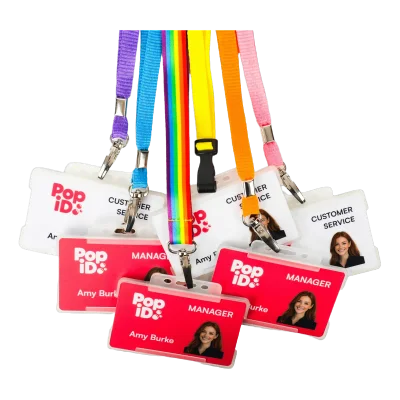
For higher-security environments (corporate clubs, restricted facilities), a photo on the card adds a layer of verification. Photo membership cards cost more because each one is personalised, but for some organisations it’s a requirement.
A barcode or QR code on the card lets you scan members in — at the front desk, at the gate, at events. This is genuinely useful if you’re tracking attendance, managing capacity, or running a cashless bar system.
3. It Needs to Be On-Brand
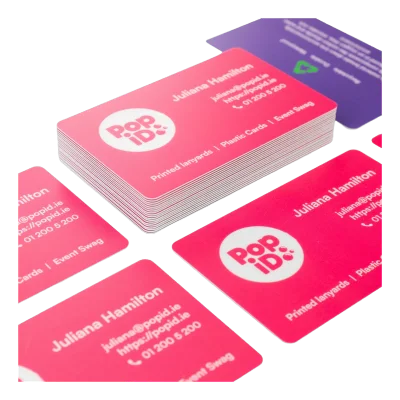
Your membership card is a piece of branding that lives in people’s wallets. It should look like it belongs to your organisation. Your colours, your logo, your visual identity.
This sounds obvious, but we see a lot of membership cards that look generic — a plain white card with a logo plonked in the middle and a name in Times New Roman. That’s a missed opportunity.
A well-designed card reinforces brand identity every time someone opens their wallet. It’s a tiny billboard that your members carry voluntarily.
4. It Needs to Work With Your Systems
If you have a door access system, the card needs to be compatible with your readers. If you have a POS system for the bar or shop, the card barcode format needs to match. If you’re integrating with membership management software (like ClubSpark, GoMembership, or a custom database), the encoding needs to talk to it.
This is the part where a quick conversation with us saves a lot of headaches. Tell us what system you use and we’ll make sure the cards work with it. Nothing worse than ordering 500 cards and finding out the barcode format doesn’t scan.
Numbering and Encoding Options
Sequential numbering. Each card gets a unique number (001, 002, 003…) printed on it. Simple, cheap, effective. The number is the link between the physical card and the member record in your database.
Barcodes. A Code 128 or Code 39 barcode on the back encodes the member number in a scannable format. Readers are cheap (around EUR 30-50 for USB) and work with most membership management systems.
QR codes. Same idea, but smartphone-scannable. Members can also use the QR code to check their own membership status, renew online, or access member-only content.
Magnetic stripe. Still used by some gyms and clubs for swipe-to-enter turnstiles. Functional but gradually being replaced by contactless.
Contactless (RFID/NFC). Tap-to-enter. The most seamless experience for members, but the highest per-card cost. Worth it if you have the reader infrastructure already.
For most clubs and associations, sequential numbering plus a barcode is the sweet spot. Low cost, works with everything, and members understand how to use it.
Perceived Value: Why It Matters More Than You Think
A high-quality membership card does something subtle: it makes the membership feel more real. More official. More valuable.
If someone pays EUR 200 for an annual membership and receives a beautiful, solid plastic card with their name on it — that feels like an investment. If they receive a PDF to print at home, that feels like a subscription.
This matters for retention. Members who feel they belong are members who renew. A physical card is a tangible reminder of that belonging.
For associations and professional bodies, the card also functions as a credential. Showing a professional membership card at a meeting or event carries weight that a screenshot on a phone doesn’t.
Common Membership Card Setups We See
- GAA clubs, sports clubs: Numbered cards with barcode, sometimes colour-coded by membership tier (adult, juvenile, family). Usually 200-500 cards per year.
- Gyms and fitness studios: Photo ID cards with barcode or contactless for door entry. Issued per member.
- Professional associations: Named cards with member number and year. Often with a holographic overlay for credibility.
- Golf clubs: Premium feel, often with gold or silver foil, member photo, and contactless for clubhouse access.
- Social clubs and co-ops: Simple numbered cards with barcode for till scanning.
Ready to Order?
We print membership cards for clubs and organisations across Ireland — from runs of 50 to 5,000+. We handle the design, the data merge, and the encoding.
Send us your logo, tell us what the card needs to do, and we’ll put together a proof and a quote. No obligation, no pressure.
Get in touch or call (01) 200 5200. We genuinely enjoy this stuff.